
- CBOT markets have seen corn and wheat leading marginally to the upside and the soy complex around unchanged on the eve of what is probably the most significant USDA report of the season. Trade appears to be on the thin side as traders struggle to anticipate the contents of tomorrow’s release.
- US weekly export data was released as follows:
Wheat: 233,8000 mt, below estimates of 325-425,000 mt.
Corn: 1,000 mt, below estimates of 100-200,000 mt.
Soybeans: 406,8000 mt, above estimates of 200-400,000 mt.
Soymeal: 118,200 mt, within estimates of 75-175,000 mt.
Beanoil: 10,800 mt, below estimates of 35-65,000 mt.
- In the first release of figures this year Brussels wheat export data for the last three weeks amounted to 1.11 million mt bringing the season total to 11.243 million mt. This compares with 9.173 million mt last year and, in the light of limited competitive wheat from Black Sea or Argentina, to name but two, makes the task of rationing a difficult one to contemplate right now. If the current EU export pace is maintained we face the potential for huge feed grain import requirements to fill the gap.
- The latest Egyptian tender today awarded 55,000 mt of US soft red winter wheat and 60,000 mt of Canadian soft red winter wheat. Prices were reported to be significantly cheaper than the limited offers of French wheat which were put forward and confirming our earlier comments that US wheat is the most competitive at present.
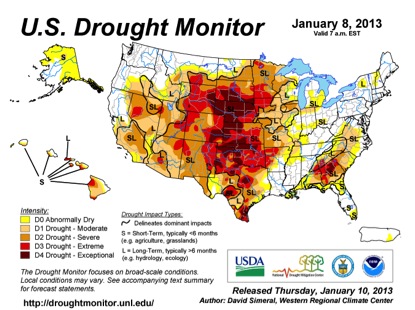 Yesterday we saw a statement from US Agriculture Secretary, Tom Vilsack, designating 597 counties and 14 states as “primary natural disaster areas due to drought and heat.” Th impact of this designation is to make farmers in these areas eligible for emergency loans at low interest rates. Last year some 2,245 counties and 39 states (71% of the US) qualified for this same status.
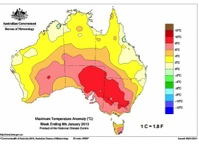 In Australia, one of the last potential global wheat “pressure relief valves”, recent weather conditions have been less than conducive to the ongoing crop development. Intense drought and extreme heat has worsened to outlook for the 2012/13 harvest. Current temperatures have topped 112 to 114℉ (44 to 45℃) in parts of New South Wales and South Australia (key wheat growing regions) and follow an intensely hot December. To put the temperatures into context, they are 14℉ (8℃) above normal.
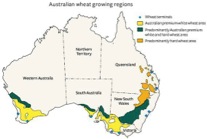 However, all is not lost, Western Australia received later and significant rainfall, which followed a dry beginning to the season, leading to a “reasonable” crop. Additionally, the region has not suffered the same intensity of heat as SA and NSW. There are, however, potential quality issues with late harvested grains sprouting due to wet harvest conditions. The dryer eastern regions have the potential to suffer from shrivelled grains as a direct result of heat which will compromise overall yield. All in all, the USDA’s 22 million mt estimate for Australian wheat output looks to be a high number right now, an output of closer to 20 million mt appears more likely in the light of the conditions.
- We look forward to tomorrow’s report with interest and hope that we see some clear market direction as a consequence. There are many who believe we will see “fireworks” potentially with limit moves (in corn), but in which direction?