Weekly CCI Analysis:
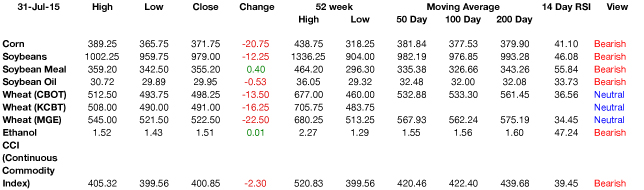
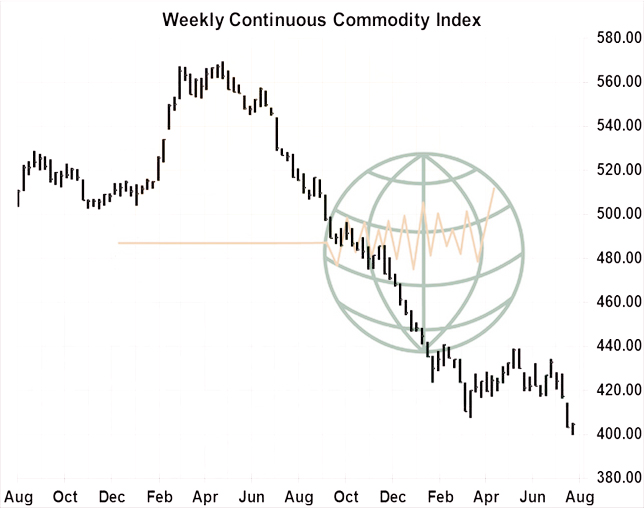
The CCI/CRB index fell to fresh six year lows, but was able to modestly recover into the end of the month. Weaker energy, grain and metal prices were partially offset by a rally in meats and tropical ag markets. Friday’s sharp decline in the US$ offered the bears a reason to bank some profits. We doubt that any US$ rally can be sustained as the value of the Brazilian Real slid to new eight year lows which is making their sales of agricultural goods more attractive across a host of international buyers. Also, China’s August 1st PMI reading fell to 50%, a tick below the July reading as there is no evidence of a strong bullish turn in China’s manufacturing sector. We maintain concern that China’s engine of world economic commodity growth is slowing which will have profound implications for raw material valuations in the years to come. We have (publicly and in print) been bearish commodities since 2013 and we see no reason to alter our view of selling rallies amid excessive supplies and demand growth that is less robust.
Longer-term soybean analysis:
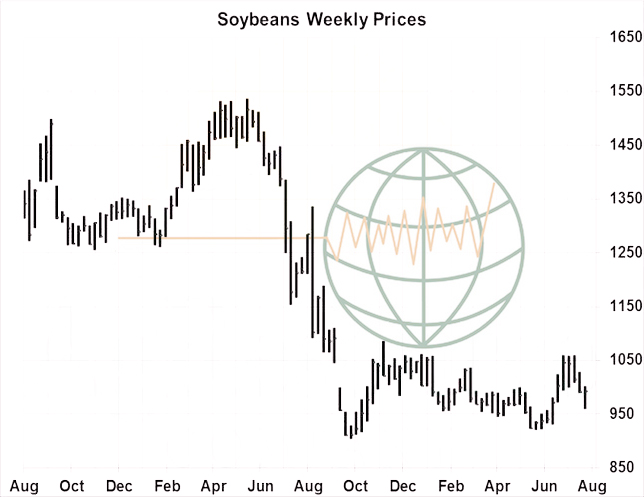
Old crop CBOT soybean futures closed down 10 cents while new crop November lost nearly 25 cents amid favorable Central US weather and continued slow US export demand. The USDA August crop report is just seven trading days away and trader anxiety will be rising in the days leading into the numbers. NASS will use the five year average pod weight which should produce a yield of around 45 bushels/acre. Its late July and August weather than determine US soybean yield, not June rainfall. We also expect that traders may be disappointed that 2015 US soybean seeding/harvested acres only falls 800,000-1.2 million acres compared to trader calls for losses of more than 2.0 million acres. MO farmers were able to seed during early July and did not place as many acres in the Prevent Plant programme. The problem facing the US soybean market is export demand. Research argues for a 2015/16 US soybean export total of 1,550 million bu or less, which makes yield/acre losses meaningless and if acres or yield ends up being larger than expected, the sluggish US soybean export sales pace opens the downside potential in November soybeans to $8.00. Our view remains bearish and we would see November rallies to $9.60-9.75 as a sale.
Longer-term corn analysis:
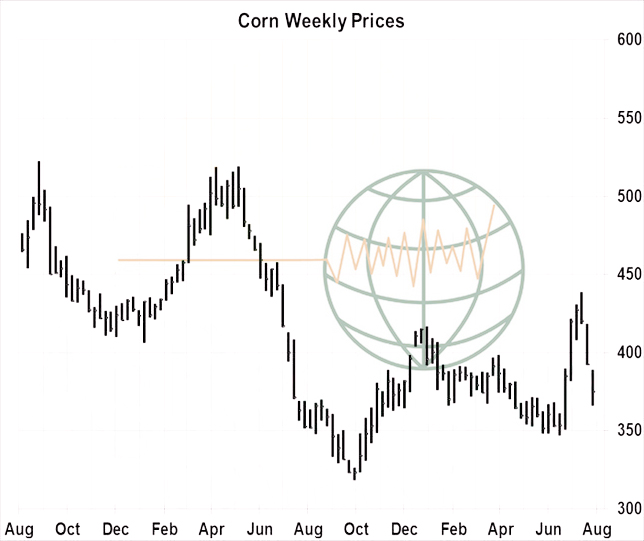
CBOT corn futures fell another 20 cents on fresh fund liquidation. The highlight was last Friday’s CFTC revelation that funds added to their net long position last week, despite a 40 cent drop in price. These losing positions were steadily washed out. Even today, we estimate that speculative funds are long a net 150,000 contracts of corn vs. last July’s net short position, which amid rising US crop potential and stale US export demand suggests additional downside risk. The only issue of note is yield loss in Europe amid lengthy hot/dry weather during July and how this will impact EU wheat exports and corn imports. S America should fill much of Europe’s additional feed need, and generally Brazilian and Argentine offers for Sep/Oct remain some $.20-.40/bu below US Gulf origin. Research maintains a US yield range of 165-168 bushels/acre which in turn suggests 2015/16 stocks/ use of 13-15% and an autumn price range of $3.30-3.90. Rallies based on US production moving forward will be fleeting, as the market is required to boost US exports and industrial use.
We fear that if the two-week Central US forecast is verified, additional liquidation will persist into the August crop report.
Longer-term wheat analysis:
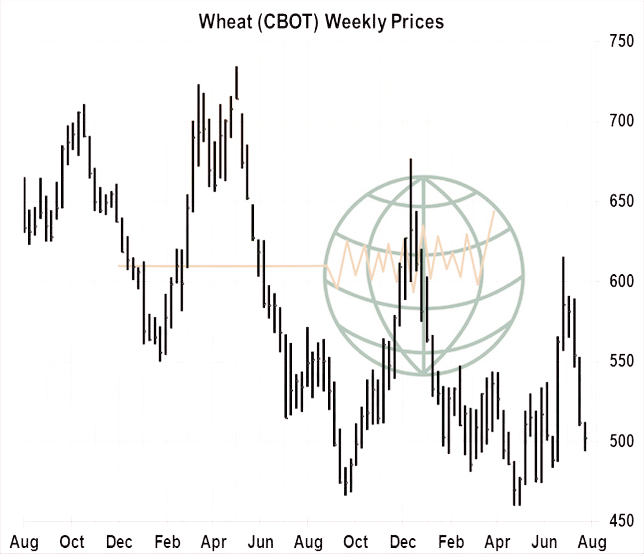
US wheat futures ended the week down 15-18 cents with futures contracts in Minneapolis pacing the decline on record spring wheat yield potential. Futures in Europe fell €4/mt. The primary feature of the market remains too much supply chasing too little demand, as Russian fob offers into October trade in a range of $191-197/mt, or just a few dollars above the seasonal lows posted in May. Wheat production estimates are rising across the Black Sea and just this week the Wheat Quality Council’s tour of ND pegged the US spring wheat yield at a record 49.9 bushels/acre. Even Canadian crops have improved amid favourable July weather, and welcomed widespread rain fell across W Australia. 2015/16 world wheat production is rising and could reach a record 730 million mt with stocks at a record large 215 million mt. There is currently no shortage or story for world wheat prices. Meanwhile, importers continue to cover only short term needs and are unwilling to chase rallies. Without a threat to Aussie production – work indicates that spot Chicago futures must trade in a range of $4.60-5.30 into autumn to encourage consumption. Wheat’s premium to corn should also erode to attract feed use.