
- We have seen further soybean liquidation today, which has naturally pressured prices further to the downside. The entire soybean complex is currently trading in negative territory once again. Technically, the charts present a bearish picture and until there are signs of the decline ending and reversing we must side with the trend. It has to be noted that volumes remain on the light side.
- Corn and wheat have not reacted in total sympathy with soybeans; corn is unchanged to slightly lower whilst wheat markets are currently displaying gains. Non US origin grains are displaying stronger signs amid continuing physical tightness. As we have previously reported Russian domestic prices have made record prices and are still close to their highs, Argentine wheat is difficult to source following their wet weather conditions, Black Sea grain has been finished for a while and EU levels remain relatively firm amid strong exports and consumer demand.
- The current wheat fund short position is to be watched closely given the fact that CBOT wheat is among the world’s cheapest. Should there be a change of heart and covering of shorts we could well see prices rebound significantly in a short period of time.
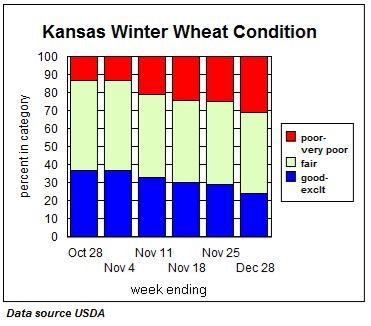
- The latest US wheat condition report was issued yesterday and showed Kansas and Oklahoma to be worse than a month ago. It was widely expected that condition would improve as a result of improved precipitation, but this has not been the case. Kansas winter wheat condition fell to 24% good to excellent from 29% whilst the proportion rated poor to very poor rose to 31% from 25% a month ago.
- Oklahoma conditions over the same time frame showed the crop rated good to excellent declined to 11% from 14% and poor to very poor rose to 61% against 44%.
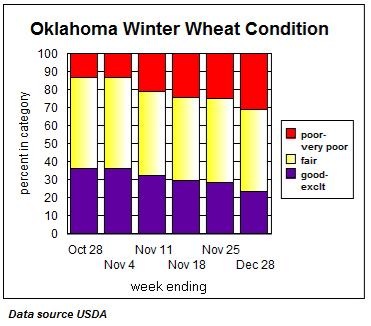
- The conclusion we draw from the decline in condition is that the onset of cold winter conditions and freezing temperatures is largely the culprit as the crop was in less than ideal shape and late entering dormancy. The next USDA crop condition report is a month away and we look forward to seeing if there will be any reversal of the current trend.